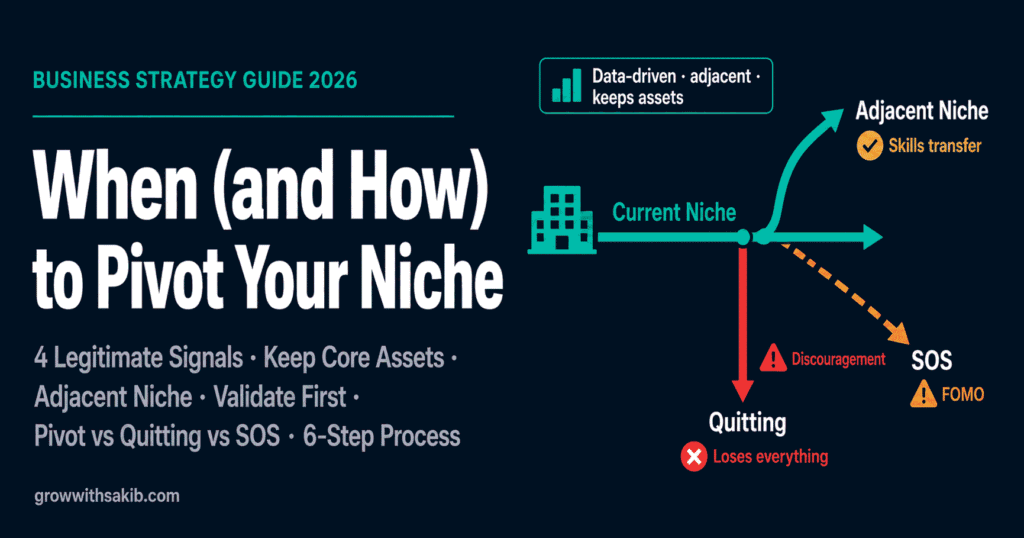
Pivot your business niche when clear evidence — not boredom or a passing trend — shows your current niche lacks demand, buying power, or fit. A good pivot is deliberate, data-driven, and keeps what’s working: your skills, audience relationships, and reputation. You change direction, not identity, and you move toward an adjacent niche rather than starting over from zero.
Pivoting carries a bad reputation it doesn’t deserve. Some of the most successful companies alive today are pivots. The trick is knowing the difference between a strategic pivot and simply quitting — a distinction this article makes concrete. It’s the closing piece of the pillar guide on finding the right niche, and the disciplined counterpart to avoiding shiny object syndrome.
What Is a Business Niche Pivot?
A niche pivot is a deliberate, evidence-based change to the audience or problem your business serves, while keeping the core strengths you’ve already built. It’s a strategic redirection — not abandoning your business and starting a new one from scratch.
The distinction that matters most: a real pivot retains an asset. When Slack’s founders abandoned their game Glitch, they kept the internal messaging tool they’d built and turned that into the product. As CB Insights documents, Instagram did the same — dropping the check-in app Burbn but keeping its popular photo-sharing feature. The lesson: successful pivots don’t torch everything. They carry forward the technology, audience, or expertise that was working — which starts with knowing your strongest, most-transferable skill before choosing any new direction.
Pivot vs. Quitting vs. Shiny Object Syndrome
Three things look similar from the outside but lead to very different outcomes. Knowing which one you’re doing is the whole game.
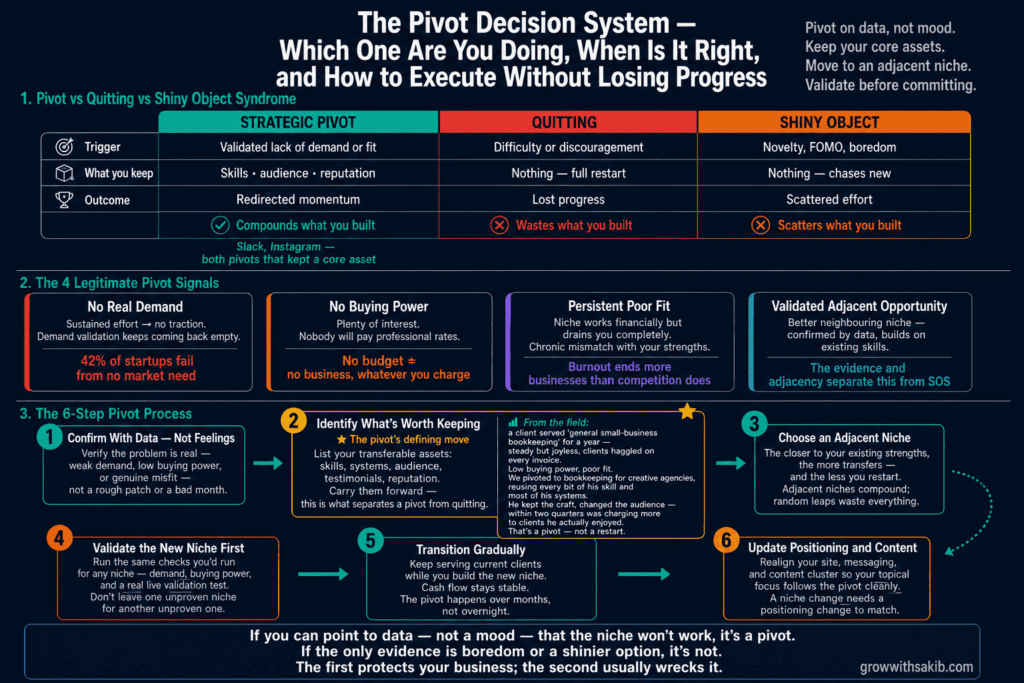
| Trigger | What you keep | Outcome | |
|---|---|---|---|
| Strategic pivot | Validated lack of demand/fit | Skills, audience, reputation | Redirected momentum |
| Quitting | Difficulty or discouragement | Nothing — full restart | Lost progress |
| Shiny object | Novelty, FOMO, boredom | Nothing — chases new | Scattered effort |
The pivot is the only one of the three that compounds what you’ve built — much like how specialist positioning compounds referrals and reputation rather than scattering them across too many directions. That’s why walking away on data rather than novelty is a strength, while chasing the next shiny thing is the failure mode to avoid.
When Should You Pivot Your Niche?
Pivot when the evidence is real and repeated — not on a single bad month. These are the legitimate signals.
1. The niche lacks genuine demand
If sustained effort produces no traction and your research keeps confirming thin interest, the niche itself may be the problem. Building for a market that isn’t there is the most common reason ventures fail — CB Insights found 42% of startups fail from no market need. If your demand validation keeps coming back empty, that’s a pivot signal.
2. The niche has no real buying power
Plenty of interest but nobody will pay professional rates? That’s a buying power problem, and no amount of effort fixes a market without budget. Pivoting toward an audience that can actually pay is one of the highest-return moves a service business can make.
3. Persistent poor fit
Sometimes the niche works financially but drains you completely. Chronic mismatch with your core strengths or values is a valid reason to pivot — burnout quietly ends more businesses than competition does. A niche has to be sustainable for you, not just viable on paper — and defining your target audience more precisely within the current niche sometimes resolves the fit problem without requiring a full pivot.
4. A clearly better adjacent opportunity — backed by evidence
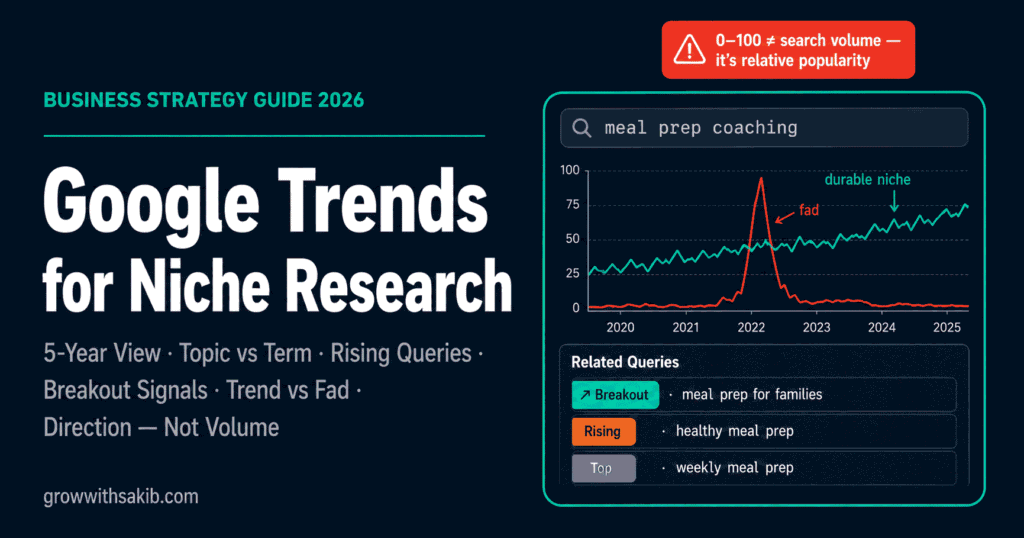
Occasionally you discover a neighbouring niche with stronger demand or fit, confirmed by real data rather than excitement — Google Trends for niche research is one of the fastest free methods for checking whether that adjacent niche shows growing or fading interest before you commit. If it builds on your existing skills and you’ve validated it, that’s a strategic pivot — not a shiny object. The evidence and the adjacency are what separate the two.
How to Pivot Your Niche Without Losing Everything
A good pivot is a controlled manoeuvre, not a leap. These steps protect what you’ve built while you change direction.
- Confirm with data, not feelings. Before pivoting, verify the problem is real — weak demand, low buying power, or genuine misfit — not a rough patch.
- Identify what’s worth keeping. List your transferable assets: skills, systems, audience, testimonials, reputation. Carry them forward.
- Choose an adjacent niche, not a random one. The closer the new niche to your existing strengths, the more transfers and the less you restart.
- Validate the new niche before committing. Run the same checks you’d run for any niche — demand, buying power, and a real validation test.
- Transition gradually where you can. Keep serving current clients while you build the new niche, so cash flow doesn’t crater mid-pivot.
- Update your positioning and content. Realign your site, messaging, and content cluster so your topical focus follows the pivot cleanly.
Common Mistakes When Pivoting
- Pivoting on emotion, not evidence. A bad month or boredom isn’t data. Confirm the niche is truly failing first.
- Throwing away transferable assets. Restarting from zero wastes the skills, audience, and reputation you could carry over.
- Jumping to an unrelated niche. The further the leap, the less transfers — and the more it resembles quitting.
- Pivoting without validating the new niche. Leaving one unproven niche for another unproven one solves nothing.
- Pivoting too often. Repeated pivots are a pattern, not a strategy — usually shiny object syndrome in disguise. The complete guide to finding the right niche is what prevents choosing wrong in the first place.
When You Should NOT Pivot
Pivoting has a real cost, and sometimes staying put is the braver, smarter call. Don’t pivot simply because you’ve hit the hard, boring middle of building something — early traction often arrives right after the point most people quit. If your niche shows genuine demand and buying power but you’re just tired, the answer is usually persistence or a small adjustment, not a pivot.
Be especially wary of pivoting before you’ve given the niche a fair, time-boxed test. Abandoning a niche that never got a real chance isn’t a pivot — it’s the shiny object trap. And remember that every pivot resets some of your niche topical authority and momentum, so the bar for changing should be evidence you’d be comfortable defending to a skeptical advisor. If you can’t, it’s probably not time yet.
Frequently Asked Questions
When should I pivot my business niche?
Pivot when real, repeated evidence shows your niche lacks demand, buying power, or fit — not because of boredom or a single bad month. Valid signals include sustained no traction despite effort, an audience that won’t pay professional rates, chronic misfit with your strengths, or a validated adjacent opportunity. The trigger should always be data, never mood.
What’s the difference between a pivot and quitting?
A strategic pivot is triggered by validated evidence and keeps your core assets — skills, audience, and reputation — while redirecting toward a better niche. Quitting abandons everything and restarts from zero, usually out of discouragement. The defining test is whether you carry forward what was working; a real pivot compounds your progress rather than discarding it.
How do I pivot without losing my existing clients and progress?
Confirm the need with data, list your transferable assets, and choose an adjacent niche close to your current strengths so more carries over. Validate the new niche before committing, and transition gradually — keep serving current clients while building the new focus so your cash flow stays stable through the change.
Is pivoting a sign of failure?
No. Many of the most successful companies are pivots — Slack and Instagram both abandoned their original products while keeping a core asset. Pivoting reflects strategic agility: recognising when evidence says one direction won’t work and redirecting toward one that will. It’s failure only if you ignore the data and refuse to adapt.
How often should a business pivot its niche?
Rarely and deliberately. A genuine pivot responds to validated problems, so it shouldn’t happen often. Repeated pivots every few months are a warning sign — usually shiny object syndrome rather than strategy. Each pivot also resets some momentum and topical authority, so the bar for changing direction should stay high and evidence-based.
Should I pivot if I’m just not enjoying my niche?
Not automatically. If the niche has real demand and buying power but you’re tired or bored, the answer is often persistence or a small adjustment, not a full pivot. Chronic, genuine misfit with your strengths or values is a valid reason — but distinguish lasting mismatch from the normal hard middle of building a business.
Key Takeaways
- Pivot on validated evidence — weak demand, low buying power, or genuine misfit — never on boredom or FOMO.
- A real pivot keeps a core asset: your skills, audience, systems, or reputation.
- Pivot, quitting, and shiny object syndrome look alike — only the pivot compounds what you’ve built.
- Choose an adjacent niche, not a random leap, so the most transfers over.
- Validate the new niche and transition gradually to protect cash flow.
- Don’t pivot before a fair, time-boxed test — that’s the shiny object trap, not strategy.
- Successful companies like Slack and Instagram are pivots — changing direction isn’t failure when it’s evidence-led.